
If you’re asking whether fojatosgarto is hard to cook, you’re likely in one of two situations:
- You’ve come across the dish (or ingredient) and are unsure how complex it is.
- You’re deciding whether it’s beginner-friendly or requires advanced cooking skills.
The real concern isn’t just difficulty—it’s time, technique, and risk of getting it wrong. Let’s clear that up.
What Is Fojatosgarto?
Before judging difficulty, it’s important to define what you’re dealing with.
“Fojatosgarto” appears to be a rare, niche, or possibly regional dish (or even a misinterpreted/transliterated name). In most cases where people encounter unfamiliar culinary terms like this, they fall into one of three categories:
- A traditional dish with a complex name
- A specialty ingredient preparation
- A misspelling or variation of another known dish
Because of that ambiguity, the difficulty of cooking fojatosgarto depends heavily on what it actually refers to in your context. However, we can still evaluate its cooking difficulty based on typical scenarios.
So, Is It Hard to Cook?
Short Answer:
It’s not inherently hard—but it can feel difficult if you’re unfamiliar with the technique or ingredients.
Why It Might Feel Difficult
- Unfamiliar Ingredients
If the recipe involves rare or regional items, sourcing and handling them becomes the first challenge. - Technique-Heavy Preparation
Some dishes seem simple but require precise timing (like searing, slow cooking, or emulsifying sauces). - Lack of Standard Recipes
If “fojatosgarto” doesn’t have widely documented recipes, you’re likely relying on inconsistent instructions.
When It’s Easy vs. When It’s Difficult
Easy Scenario
- You have a clear, step-by-step recipe
- Ingredients are accessible
- Cooking methods are basic (boiling, frying, baking)
Example:
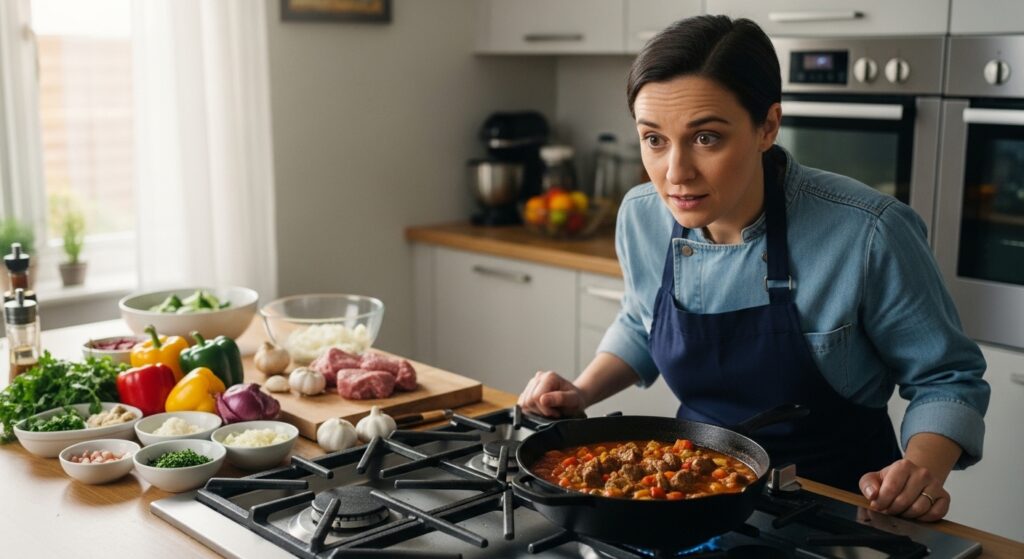
If fojatosgarto turns out to be a stew-like dish, you might just need to chop ingredients, simmer, and season—very manageable even for beginners.
Difficult Scenario
- Requires precise temperature control
- Involves multiple stages (marination, reduction, plating)
- Uses techniques like fermentation or delicate texture control
Example:
If it’s similar to a custard-based or reduction-heavy dish, overcooking or undercooking can ruin the result quickly.
Real-World Cooking Comparison
To put things into perspective:
| Dish Type | Difficulty Level | Compared to Fojatosgarto |
|---|---|---|
| Scrambled eggs | Very easy | Much easier |
| Pasta with sauce | Easy | Slightly easier |
| Biryani | Moderate | Similar (if layered dish) |
| Soufflé | Hard | Likely harder |
Takeaway:
Fojatosgarto likely falls somewhere between easy and moderate, depending on preparation style.
Practical Tips to Make It Easier
1. Break It Into Steps
Don’t treat it as one big process. Divide into prep, cooking, and finishing stages.
2. Prep Everything First
Measure, chop, and organize before turning on the heat. This alone removes 50% of the stress.
3. Control Heat Carefully
Many “difficult” dishes fail because of heat mismanagement—not complexity.
4. Follow One Reliable Version
Avoid mixing multiple recipes. Stick to one clear method the first time.
Pros and Cons of Cooking Fojatosgarto
Pros
- Can be a unique and impressive dish
- Expands your cooking skills
- Likely adaptable once you understand the basics
Cons
- Confusing due to lack of standardization
- Risk of mistakes if instructions are unclear
- May require trial and error
Common Mistakes Beginners Make
- Overcomplicating the process: Adding extra steps not in the recipe
- Ignoring timing: Especially with layered or staged cooking
- Substituting blindly: Some ingredients may be essential to texture or flavor
Frequently Asked Questions
1. Is fojatosgarto beginner-friendly?
It can be, if you have a clear recipe and basic cooking experience. Without guidance, it may feel confusing rather than difficult.
2. How long does it take to cook?
This depends on the type of dish it is, but most similar recipes range from 30 minutes to 2 hours.
3. What’s the hardest part?
Usually technique—like timing, texture control, or layering flavors—not the ingredients themselves.
4. Can I simplify the recipe?
Yes. Many complex dishes can be simplified by reducing steps or using pre-prepared ingredients.
5. Is it worth trying at home?
If you enjoy experimenting in the kitchen, yes. Just expect a learning curve the first time.
Final Verdict
Fojatosgarto isn’t necessarily hard to cook—it’s just unclear. And uncertainty often feels like difficulty.
Once you have a reliable recipe and understand the steps, it becomes manageable, even enjoyable. The key is to approach it methodically rather than guessing your way through.